
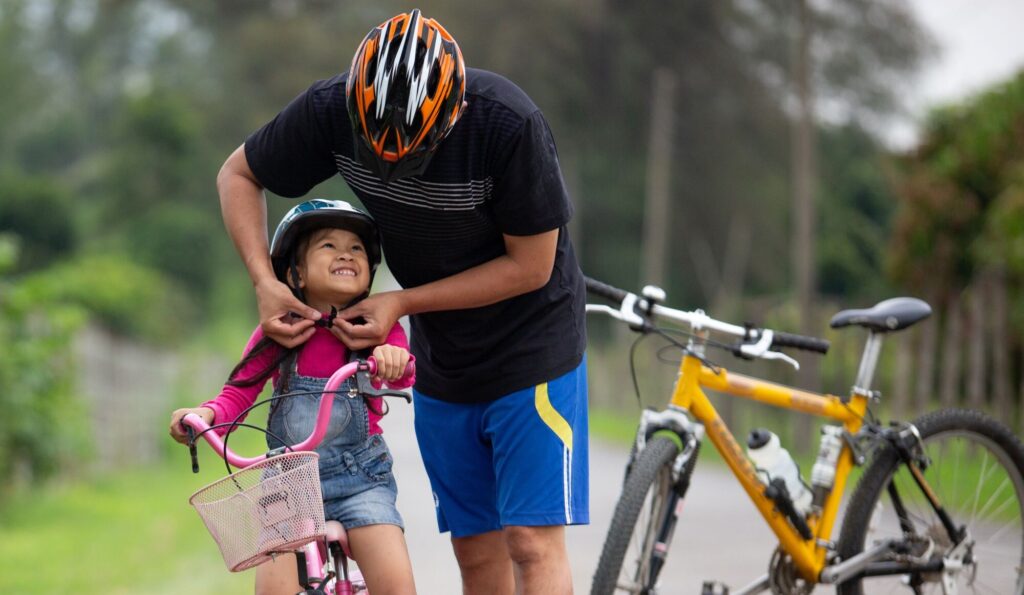
Bicycle helmets are among the most effective safety devices for riders of all ages. Not only do they reduce the risk of head injury, but decades of research also show their impact on serious trauma and fatalities. But how effective are they? Who wears them, and when? What does research tell us about their impact on injuries and deaths? Let’s dive into the key numbers that every cyclist (and supporter of safe riding) should know.
Wearing a Helmet Reduces Head Injuries
Children are more likely to be wearing helmets than adults, as children grow into teenagers their helmet usage decreases. Younger riders are at higher risk of injury in a crash making it even more important that they wear a helmet and wear it correctly!
Areas with mandatory helmet laws show higher compliance than places without such laws in place, additionally helmets are more widely worn in urban areas than in rural locations.
In an analysis of more than 40 studies which included over 65,000 injured cyclists it was found that:
- Helmet use was associated with a 49% reduction in head injury risk.
- The risk of serious head injury dropped even more — about 69% lower.
- Facial injuries were reduced by about 33%.
- The risk of a fatal head injury was reduced by 35%.[i]
Parent Tips
Parents should encourage their children to wear helmets by modeling the desired behavior. Make it a rule that in your family your helmet is on and the straps are secured before you hop on your bike. Examine the helmet at every ride and adjust the straps as needed to ensure it is secure on your child’s head. Check your child’s helmet frequently for comfort and damage and replace one that has noticeable dents or sun damage. If your child is in a crash and their helmet makes impact on the ground it should be replaced. Plan to replace your child’s helmet every few years as they grow.
[i] Olivier J, Creighton P. Bicycle injuries and helmet use: a systematic review and meta-analysis. Int J Epidemiol. 2017 Feb 1;46(1):278-292. doi: 10.1093/ije/dyw153. Erratum in: Int J Epidemiol. 2017 Feb 1;46(1):372. doi: 10.1093/ije/dyw360. PMID: 27450862.